Certificate
Anesthesia Machine Service Technician
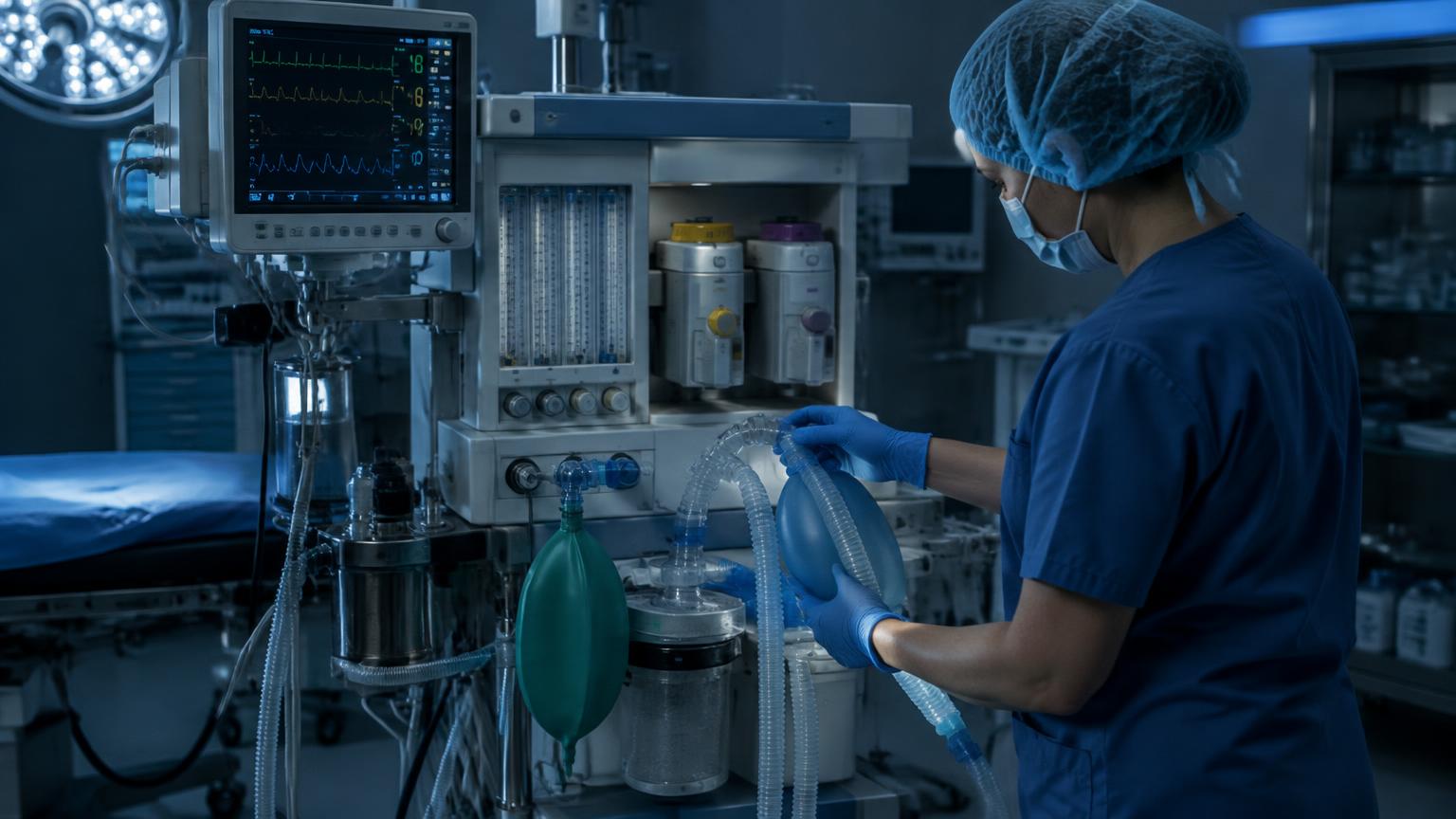
A 18-credit certificate for biomedical and surgical services technicians who maintain anesthesia workstations. You start with hospital medical gas supply, cylinder and pipeline systems, and operating room safety, then work through the high, intermediate and low pressure sections of the machine: flow control, proportioning systems, vaporizers, the circle breathing system, absorbents and scavenging. From there you move into anesthesia ventilator drives, gas and agent analyzers, sensors, power supplies and control electronics, and finish with the preventive maintenance, leak and vaporizer output testing, electrical safety checks and documentation that keep a department survey-ready. Coursework is vendor-neutral; Anode is not affiliated with, endorsed by, or an authorized training provider for any equipment manufacturer. The last two courses cover advanced troubleshooting and diagnostics, then inspection, regulations and compliance.
Outcomes
What you will be able to do
- 01Work safely with medical gas pipelines, cylinders, and operating room electrical systems
- 02Trace and diagnose faults through the high, intermediate, and low pressure sections of an anesthesia workstation
- 03Service vaporizers, circle breathing systems, absorbents, and scavenging systems
- 04Troubleshoot anesthesia ventilator drives, sensors, gas analyzers, and control electronics
- 05Perform leak, vaporizer output, calibration, and electrical safety tests
- 06Complete preventive maintenance and service documentation to department standards
Careers
Where graduates work
- Anesthesia equipment technician
- Biomedical equipment technician (surgical services)
- Field service technician, anesthesia and respiratory equipment
Curriculum
Term 1
Medical Gas Systems and Safety
This course covers hospital medical gas systems, safety, and the technician's role in installation, maintenance, and verification to ensure patient safety and regulatory compliance.
Anesthesia Machine Anatomy and Pneumatics
This course examines the pneumatic architecture, components, and troubleshooting of modern anesthesia workstations, from gas supply to patient breathing circuits.
Term 4
Advanced Troubleshooting and Board-Level Diagnostics
This advanced course equips students with comprehensive skills for diagnosing and repairing complex issues in anesthesia machines, moving beyond component replacement to board-level fault isolation. Students will master systematic troubleshooting methodologies, schematic interpretation, and practical repair techniques.
Inspection, Regulations and Compliance
This course provides comprehensive training on regulatory compliance and inspection protocols for anesthesia delivery systems, preparing technicians to meet industry standards. Students will master electrical safety, record-keeping, and readiness for accreditation body inspections, ensuring safe and compliant operation.
Ready to begin? One click adds all 6 courses to your student portal.